65% of 490,440 flat owners took out HDB loans

[ad_1]

The average monthly instalment for flat owners servicing HDB loans ranges from $567 to $1,253 depending on the flat type. 

The Ministry of National Development revealed that 490,440 HDB flat owners were servicing mortgages as at end-2018, of which 65 percent (320,526) took their loan from the Housing Board.

In a written reply to MP Walter Theseira, the ministry noted that 22 percent of those that took an HDB loan owned a three-room or smaller flat, 46 percent owned a four-room flat, 26 percent owned a five-room flat, while the remaining six percent owned an executive or larger flat.

Find HDB flats for sale or read our HDB guides and BTO guides

“The average monthly instalment for flat owners of three-room and smaller, four-room, five-room, and executive/bigger flats servicing HDB loans was $567, $853, $1,058 and $1,253 respectively,” it said.

“Amongst these flat owners, 224,836 (70 percent of 320,526) households paid their monthly instalment fully using CPF monies, 44,693 (14 percent) households paid fully in cash, and 50,997 (16 percent) households used a combination of cash and CPF monies.”

It added that 91 percent of those who took an HDB loan also secured a concessionary loan, the interest of which is pegged at 0.1 percent above the CPF Ordinary Account interest rate, which currently stands at 2.5 percent and does not change frequently.

“This has helped to provide certainty to HDB borrowers on their monthly mortgage repayments.”

Meanwhile, about 169,914 (35 percent of 490,440) households are servicing loans for their HDB flats from financial institutions (FIs).

It added that less than one-third of all outstanding housing loans extended by FIs were pegged to floating market interest rates as of September last year, which was down from around 60 percent in 2016.

“Many FI borrowers have switched to fixed-rate loan packages, which has reduced their vulnerability to market interest rate increases.”

HDB loan vs bank loan: What are they and which is better?


Romesh Navaratnarajah, Senior Editor at PropertyGuru, edited this story. To contact him about this or other stories, email romesh@propertyguru.com.sg

[ad_2]

Source link
Almost 50% of public rental tenants previously owned HDB flats

[ad_1]

Many public rental tenants struggle to afford a flat due to medical issues, divorce or loss of employment.

Over the past two years, an average of around 7,300 households have applied for rental flats each year, revealed the Ministry of National Development in Parliament on Monday (14 Jan).

“HDB’s public rental flats cater to households with no viable housing options or family support,” it said.

Find HDB flats for rent or read our HDB guides and BTO guides

Responding to a query from MP Zainal Sapari, the ministry said the demographic and socio-economic profile of the households was varied, with 90 percent having a household income of $1,500 or less, 40 percent were widowed or divorced, while a similar proportion were married.

Reasons cited by applicants for needing rental housing were varied, such as the inability to afford a flat due to medical issues, divorce or loss of employment.

It noted that “close to half of the households in public rental have owned an HDB flat before”.

Meanwhile, the most common reasons why public rental applications are denied include not meeting the citizenship requirement, having sufficient budget to acquire a flat or having family support for alternative accommodation.

But in the event family support is not forthcoming, the applicant will be referred by HDB to a Family Service Centre for mediation or counselling assistance.

“If mediation is unsuccessful, and the applicants cannot afford to buy a flat, HDB will be prepared to offer an interim rental or a public rental flat.”

Can you afford an HDB flat? Check your affordability now.


Romesh Navaratnarajah, Senior Editor at PropertyGuru, edited this story. To contact him about this or other stories, email romesh@propertyguru.com.sg

[ad_2]

Source link
Over 5,000 households disposed their private homes after buying HDB resale flats

[ad_1]

Buyers of resale flats are not allowed to retain ownership of private homes in Singapore or abroad.

With HDB flats meant for owner-occupation, buyers of resale flats are not allowed to retain ownership of private residential properties in Singapore or abroad, explained the Ministry of National Development in a written reply to Parliament on Monday (14 Jan).

In fact, slightly over 5,000 Singaporean households have disposed of their private residential properties after buying HDB resale flats since the policy was rolled out in 2010.

Over the past three years, around 1,200 households have appealed to retain ownership of their private homes.

HDB has acceded to around 300 appeals after taking into account specific facts of the case, such as the share of the owner in the private home and the reasons why the private home could not be recovered for his or her own use.

Home buyers looking for Singapore Properties may like to visit our ListingsProject Reviews and Guides.


Romesh Navaratnarajah, Senior Editor at PropertyGuru, edited this story. To contact him about this or other stories, email romesh@propertyguru.com.sg

[ad_2]

Source link
Opinion: Same-sex couples cast adrift in Singapore's property market

[ad_1]

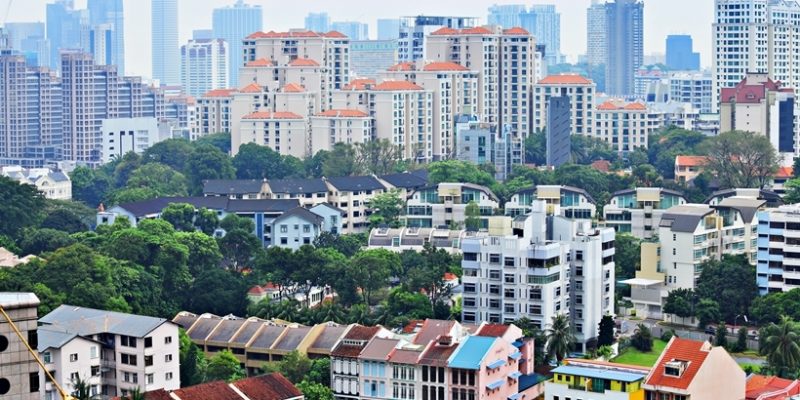
While Singapore has made some progress on LGBT issues in recent years, the country’s reputation for conservatism is echoed in archaic rules governing the purchase of public housing. Photo: lazyllama/Shutterstock

While there is no contesting the success of the country’s public housing programme, things aren’t as inclusive as they seem on the real estate scene.

By Daisy Carrington 

Singapore can be excused for taking pride in its breakneck transformation from sleepy seaside port to fourth on the International Monetary Fund’s list of richest nations. This 50-year evolution can be partly attributed to the rigid planning that has, on the one hand, fostered the world’s most successful public housing programme, and on the other, earned it the reputation of being the governmental equivalent of an overprotective parent. 

Often called “The Nanny State,” the island nation can be seen as strict with its 5.6 million children. Rules govern what Singaporeans say (speaking against the prime minister and Christianity are both illegal) and how they behave (famously, there are fines for chewing gum, littering, graffiti, spitting and jaywalking). The upshot is a gross national income of USD78,293 (the second highest globally), and a public programme housing 80 percent of the population, 90 percent of whom own their own Housing and Development Board (HDB) flat. 

However, not all groups are included in the math of Singapore’s success. One such group? Singapore’s Lesbian, Gay, Bi-Sexual, and Transgender (LGBT) community.

Singapore currently has the world’s second highest rate of homeownership, largely due to a generous system of grants and subsidies the HDB provides its citizens. These, however, come with restrictive conditions. Married heterosexual couples, who can apply for housing grants at age 21, enjoy the biggest advantage; whilst unmarried couples, singles, and gay couples are restricted to applying under the Single Singapore Citizen Scheme or Joint Singles Scheme, both of which require applicants to be at least 35. 

These restrictions may not be specifically targeted at LGBT families, but Indulekshmi Rajeswari, a lawyer, LGBT activist, and author of Same But Different: Legal Guidebook for LGBT Couples and Families in Singapore, points out the government has stated openly on several occasions that they are meant to “encourage families”. As same-sex marriage is not recognised, “LGBT people are cut out of this definition. Only those in a recognised family unit—primarily married heterosexual couples—are normally allowed to buy a HDB apartment.” 

More: 5 best Southeast Asian cities for LGBT property seekers

Ann, a new homeowner who identifies as lesbian, felt pressured to buy private property as she didn’t feel secure waiting eight years to be eligible for an HDB flat. She ponders, “What if I waited until I reached 35, and they say, ‘no, the age is now 45’?”

Buying a private apartment meant a big mark-up for Ann, whose two-room condo (still three years from completion) cost USD650,000. The same sized HDB apartment would’ve cost a married couple between USD150,000-220,000. Because Ann’s partner is a foreigner, purchasing the apartment together would have resulted in a 20 percent Additional Buyer’s Stamp Duty. Since her income and savings weren’t enough to secure a mortgage solo, she purchased the apartment with a friend.

Some in the industry feel that the limited supply of new HDB apartments, coupled with an elderly generation of homeowners reluctant to give theirs up, is locking many young Singaporeans out of the market. Currently, Singaporeans who qualify for HDB flats have to wait three years for Built-to-Order apartments to be available. “Affordability and costs of living are bigger issues than the alleged ‘LGBT segregation,’” says Wenhui Lim, director of Singapore-based firm Spark Architects.

In fact, a large portion of non-homeowners continue to live at home. Singapore’s 2016 National Youth Council Survey reveals 97 percent of unmarried young people live with their parents. 

For some in the LGBT community, though, this might not be an option. 

“If your parents aren’t accepting of who you are, you get chased out of the house,” says Deveshwar Sham, a transgender activist who runs Kopitiam Brothers, a shelter and support group for transgender men.

Renting poses its own problems. Legally, LGBT individuals are not protected from discrimination, meaning landlords can opt not to rent to them. Sham relates experiencing first-hand the difficulty of renting a room as a transgender man. “Renting was an issue, because as I was transitioning, I was looking more male, but my ID still showed I was female. Landlords would think, ‘oh, you might be a thief or a con man.’ They don’t discriminate in front of us, or publicly, but they’ll say they already have a tenant,” he relates.

More: Alternative short-term rentals gaining popularity in Singapore

Since Sham transitioned, his ID now states he is male, making his later marriage to his wife legitimate, and easily qualifying him for the HDB subsidies. Transitioning has drastically improved his life. “If I’d not transitioned, I would have considered travelling out of Singapore,” he admits, “but now that I have, I feel comfortable in my country, and don’t have my rights stripped off of me.” 

As with some of its more conservative neighbours in Asia, Singapore’s stance towards its LGBT residents could be costing it talent, and money. China, for instance, represents the world’s third largest “pink economy”, with 90 million LGBT Chinese with a total spending power of USD928 billion, according to the World Property Journal. When it comes to where to invest those dollars, they’re more likely to buy property in such foreign markets more accepting of their lifestyle as Bangkok, Phuket, and Manila. 

Singapore’s policies not only cost foreign investment, but there’s a danger LGBT Singaporeans will emigrate to more tolerant countries when they’re ready to settle down and buy property. 

Ann, for one, hasn’t ruled out leaving Singapore one day. “Even though I purchased this property, it may not be somewhere I want to be for life. If the value increases, I may want to sell it off and move overseas,” she says. “I know a lot of LGBT couples who have chosen to move their lives elsewhere, because here it is ignored that we are humans, too.”

Find HDB flats for sale or read our HDB guides and BTO guides

This article was originally published on Property-Report.com. For more stories from Asia’s most trusted and enduring luxury real estate, architecture and design publication, visit Property-Report.com

[ad_2]

Source link

Tampines EC site receives healthy interest with 7 bids

[ad_1]

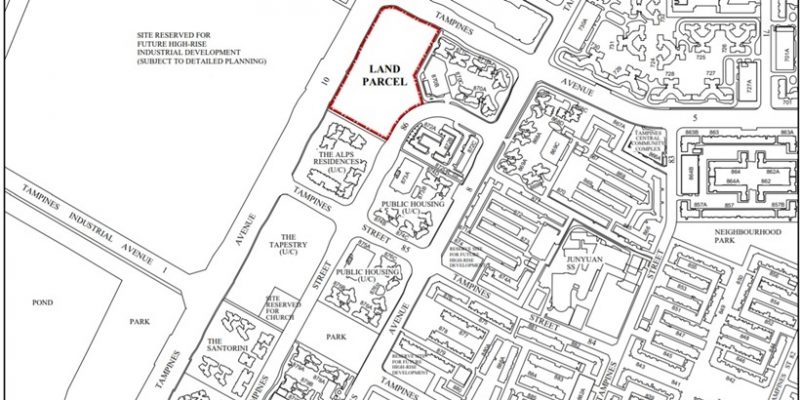
Location map of the EC site at Tampines Avenue 10. Source: HDB

The tender for an executive condominium (EC) site at Tampines Avenue 10 received healthy interest from developers, with seven bids received.

A consortium comprising Hoi Hup Realty and Sunway Developments submitted the highest bid of $434.45 million, followed by MCC Land (Singapore) with a $431.6 million bid.

More: Govt Launches Three Sites Yielding 700 ECs, Over 1,300 Private Condos

CDL Constellation and TID Residential submitted the third highest bid of $414.3 million, while Qingjian Realty (Residential) and Evia Real Estate (8) offered $408.9 million for the site.

Lee Sze Teck, Huttons Asia’s head of research, attributed the keen interest received to the site’s location.

“It is not often that you get an EC site in a mature estate,” he said. “Furthermore sales of new EC projects in Tampines have been well-received in the past. Plus there is a lot of latent demand in the market for EC units judging from the ground experience. That may explain why we see such robust bids put in by developers.”

Launched for sale in October, the 24,933.7 sq m EC site has a maximum gross floor area of 69,815 sq m and a gross plot ratio of 2.8. It comes with a 99-year lease and could yield 695 housing units.

Home buyers looking for Singapore Properties may like to visit our ListingsProject Reviews and Guides.


Romesh Navaratnarajah, Senior Editor at PropertyGuru, edited this story. To contact him about this or other stories, email romesh@propertyguru.com.sg

[ad_2]

Source link
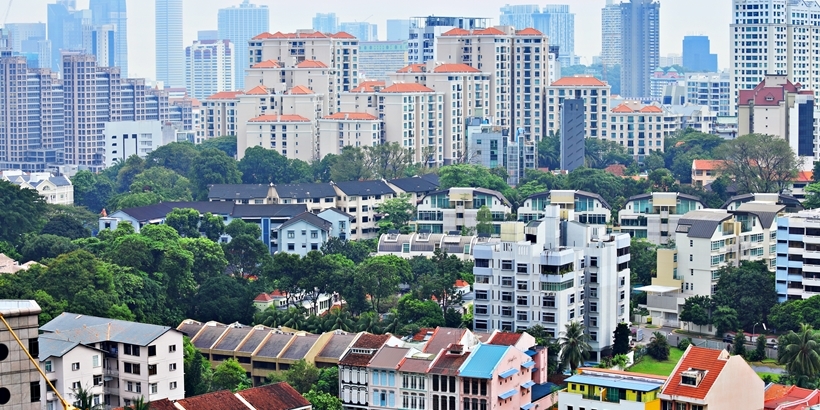
New private home sales fell almost 50% m-o-m in Dec | Property Market

[ad_1]

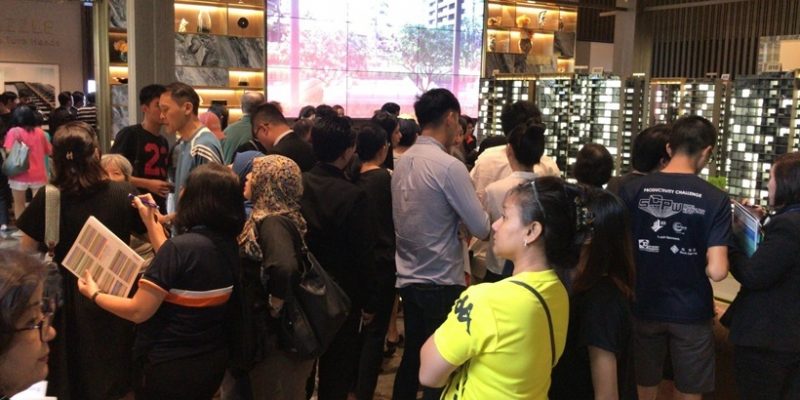
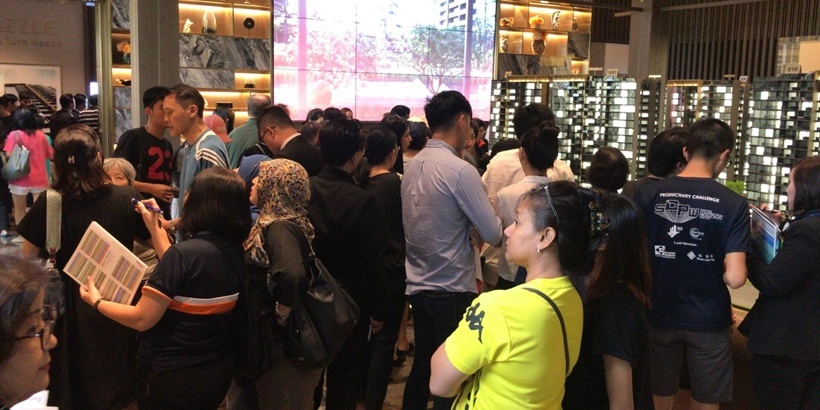
A crowd of potential buyers at Parc Esta’s sales gallery in November. (Photo: MCL Land)

New private home sales fell by almost 50 percent to 602 units in December from 1,201 units in November, on the back of the year-end lull and a dearth of new launches, reported the Business Times.

On a yearly basis, new private home sales surged by 40 percent from the 431 units sold in December 2017.

Including executive condominiums (ECs), developers sold 605 units, down by almost 50 percent from the 1,205 units moved in November, but 14 percent higher from the previous year’s 531 units.

“Despite no new launch in December, sales momentum of earlier launched projects continued even after their initial launch. This largely showed that developers have gotten their product mix and pricing spot on,” said Hutton Asia’s research head Lee Sze Teck.

Parc Esta and Whistler Grand along with Riverfront Residences, Stirling Residences and Parc Colonial emerged as the top five projects in December.

Other projects that registered double-digit sales include Affinity at Serangoon, The Tapestry, Parc Botannia and Belgravia Green.

Christine Sun, head of research and consultancy at OrangeTee & Tie, noted that the ongoing sales momentum at several new projects “may indicate that the property market could be reaching equilibrium soon as prices are stabilising and more buyers are streaming back”.

“We anticipate that the current buying momentum will continue and the supply-led demand may see developers’ home sales reaching 10,000 to 11,000 units for 2019. Many projects are expected to be launched after Chinese New Year, including The Florence Residences and Treasure @ Tampines.”

Sun predicts a bumper crop of 19,000 to 21,000 new homes to be launch-ready this year.

ZACD Group executive director Nicholas Mak, however, expects home buying demand to continue to be moderated by the risk of rising interest rates, the property cooling measures, global economic uncertainty and US-China trade tensions.

“Residential developers’ sales volume in 2019 could continue to moderate to between 7,500 and 9,000 for the whole year as there is still cautious optimism and healthy underlying demand in the market,” he said.

Looking to purchase a new home? Read our in-depth project reviews of all new launches or check out our buying or rental guides.


Romesh Navaratnarajah, Senior Editor at PropertyGuru, edited this story. To contact him about this or other stories, email romesh@propertyguru.com.sg

[ad_2]

Source link

Newton Lodge up for en bloc sale at $44m | Property Market

[ad_1]

Newton Lodge is located close to Novena MRT station and the future healthcare hub. (Photo: JLL)

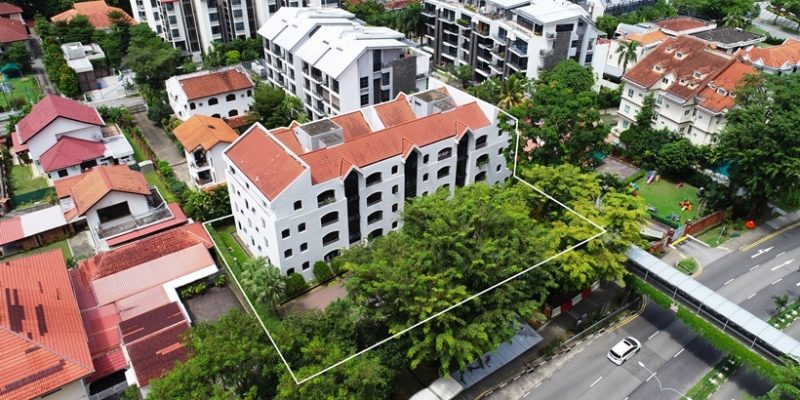
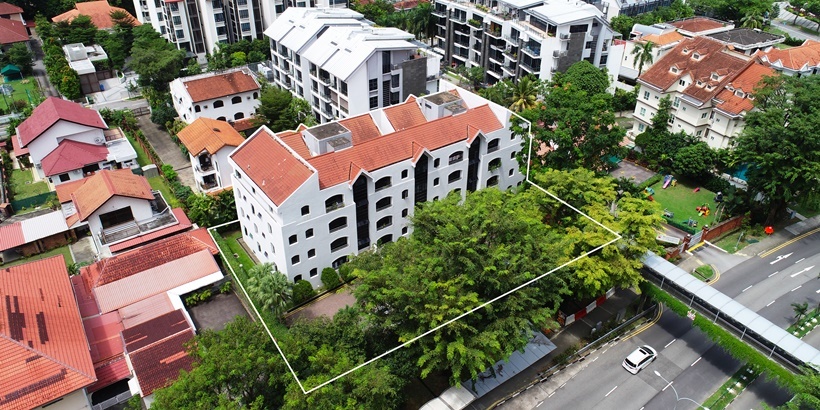
Newton Lodge, a 16-unit residential development at Newton Road, has been launched for collective sale with the owners expecting a minimum offer of $44 million, revealed marketing agent JLL.

This works out to a land rate of $1,468 psf per plot ratio (psf ppr), or $1,359 psf ppr after taking into account the eight percent bonus gross floor area for balconies and communal areas. No development charge is payable for the development.

More: Over 30 En Bloc Sites Fail To Secure Buyers

Newton Lodge is about 400m away from the Novena commercial cluster and Novena MRT station. JLL noted that major developments have been underway within the Novena area as the government aims to transform it into the largest healthcare hub in Singapore by 2030.

With an area of 21,409 sq ft, the freehold site is zoned residential with an allowable gross plot ratio of 1.4 under the 2014 Master Plan. It could be redeveloped into a low-rise apartment project with 27 units averaging 100 sq m each, a serviced residence, or a custom-built co-living development.

Should it be approved for serviced apartments, the development could potentially house about 50 to 60 units.

“The concept of sharing private and HDB apartments with unrelated tenants is common in Singapore, which is informally a form of co-living. However, professionally-run and organized co-living concepts to the levels of the co-working phenomenon is still in its infancy stage in Singapore, and is expected to grow especially with high stamp duties payable for home purchases by foreigners in Singapore,” said Karamjit Singh, senior consultant at JLL.

“Purchasers who wish to develop an entire building for co-living spaces or short-term accommodation should find Newton Lodge’s central location, project size and price quantum attractive. Not only would a boutique-sized project be more manageable, a smaller community of like-minded residents may also result in more meaningful social engagements.”

The tender for Newton Lodge will close on 26 February.

More: Understanding The En Bloc Process (August 2018)


Romesh Navaratnarajah, Senior Editor at PropertyGuru, edited this story. To contact him about this or other stories, email romesh@propertyguru.com.sg

[ad_2]

Source link

Kampong Java Road residential site attracts 7 bids | Property Market

[ad_1]

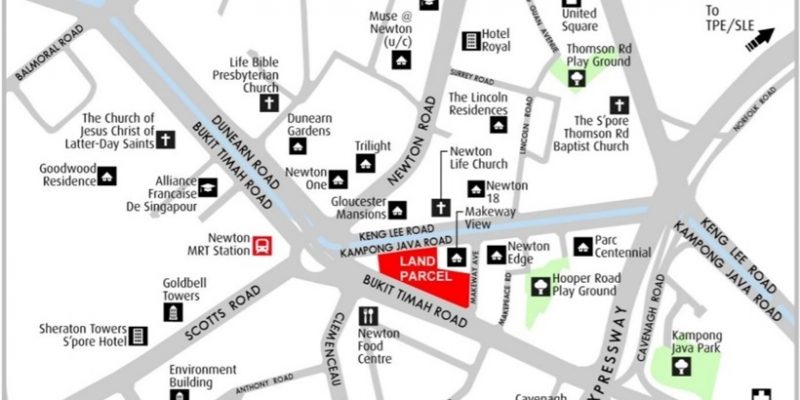
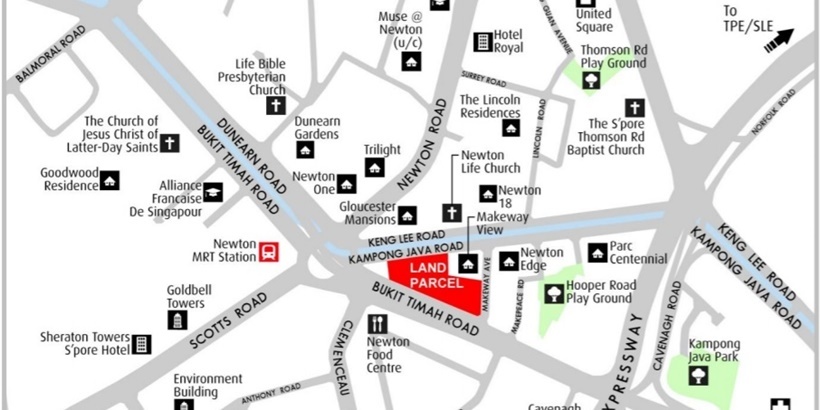
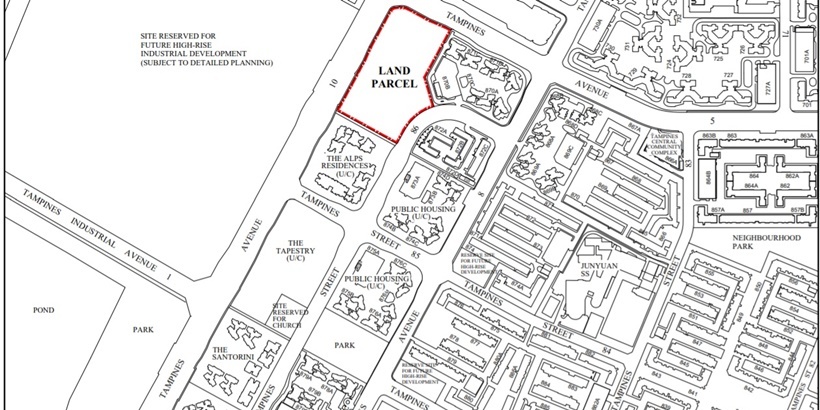
Location map of the land parcel at Kampong Java Road. Source: URA

The tender for a residential site at Kampong Java Road attracted seven bids, with CELH Development, a unit of Chip Eng Seng Corporation, submitting the highest bid of $418.4 million, revealed the Urban Redevelopment Authority (URA) on Tuesday (15 Jan).

GLL D, a subsidiary of GuocoLand, submitted the second highest bid of $417.2 million, followed by MCC Land (Singapore) and Greatview Investment’s offer of $407.9 million.

More: Govt Launches Three Sites Yielding 700 ECs, Over 1,300 Private Condos

Launched for sale on 31 October, the 99-year leasehold site has a land area of 11,643.2 sq m and a maximum permissible gross floor area of 32,601 sq m.

Meanwhile, the tender for a 5,121.4 sq m hotel site at Club Street attracted eight bids with Midtown Development – which is part of the Worldwide Hotels Group that includes Hotel 81 – offering the top bid of $562.2 million.

URA noted that it is “not an announcement of tender award”.

It added that a decision on the award of the tenders will be announced at a later date, after all the bids have been evaluated.

Home buyers looking for Singapore Properties may like to visit our ListingsProject Reviews and Guides.


Romesh Navaratnarajah, Senior Editor at PropertyGuru, edited this story. To contact him about this or other stories, email romesh@propertyguru.com.sg

[ad_2]

Source link
Urban planners bring life to “dead” spaces | Property Market

[ad_1]

Some of the dead spaces in Singapore could be transformed into urban farms and sports facilities.

As the rapid urbanisation of many Asian cities has resulted in so-called dead spaces, urban planners and authorities have exerted much effort to bring life to unused land under flyovers, bridges and viaducts, reported Reuters.

The move comes as land costs in these cities have soared and public spaces vanish.

Get more details on the property market outlook for 2019 here

Authorities in Singapore, for instance, had asked the public for ideas on how to rejuvenate approximately 60ha of dead land.

Measuring between 3,000 to 6,000 sq m each, the spaces have been transformed into urban farms, sports facilities and even used for birthday parties and markets, according to a Singapore Land Authority (SLA) report published last year.

“While land is scarce in Singapore, we do have a good number of sites under viaducts and flyovers,” said the SLA’s chief executive officer Tan Boon Khai. “Activating these sterile spaces at a low cost can encourage entrepreneurs and planners to test out new and unconventional ideas.”

In Thailand, around 40 percent of the 1.8 million sq m of land under Bangkok’s expressways are unused.

Architecture firm Shma plans to transform the land under the Sirat Expressway into recreational spaces and parks that will be connected by a 10km-long bicycle path.

“There is land – we just need to use it creatively to benefit people and reduce stress on the environment,” said Shma landscape architect Yossapon Boonsom.

“Bangkok is a very dense city. Opening up these unused spaces to increase connectivity to parks and canals can encourage more people to walk and bicycle.”

Other Asian cities had also proved that revitalising unused land is possible.

A Hong Kong architect converted concrete water pipes into micro homes that could be stacked under flyovers, while a container was used as a school for street children that was placed under a flyover near Mumbai.

A space under a flyover was also transformed into an outdoor cinema in the Indonesian city of Bandung.

In India, however, the authorities have left such spaces to the homeless and migrant workers who cannot afford to buy or rent homes.

“When the space under the flyovers is the only available space in the city for the homeless, to displace them from those spaces without providing an alternative is cruel,” said Shivani Chaudhry, executive director of advocacy group Housing and Land Rights Network in New Delhi.

To know more about the master plans for different areas in Singapore, check out PropertyGuru AreaInsider


Romesh Navaratnarajah, Senior Editor at PropertyGuru, edited this story. To contact him about this or other stories, email romesh@propertyguru.com.sg

[ad_2]

Source link
Are You Using This Secret Technique To Pass The PMP Exam On The First Attempt?

Walking into the PMP exam room is an experience. This is the moment you’ve worked toward for months. You’ve invested years of effort in work experience, courses and exam preparation. You have even read through the PMBOK Guide more than once. After all that work, are you ready? Only you can know the answer for sure.

However, there is one secret method that the most successful PMP exam takers to pass right away. Moreover, the best part? You don’t have to create any study resources on your own – you can leverage existing resources on the marketplace. One of the best resources to use are PMP practice tests. Once you complete a course to get your contact hours, practice tests give you the chance to check whether you have knowledge gaps.

Introducing PMP Practice Tests

Reading over PMP study materials over and over again is not enough to get ready for the exam. Why? That is a passive learning method. It does have value. It is best to supplement it with active learning techniques.

According to Queen’s University, “Rather than being a passive recipient of information, the active learner puts knowledge to use.” That’s exactly what you want to do when it comes to the PMP. After all, you should aspire to both pass the exam and make progress toward your long-term goals of becoming a better project manager.

In the short term, you need the capability of applying your knowledge to the PMP exam itself. While you will not be expected to write essays, critical thinking and problem solving using project management concepts are still vital. There are even some expectations that you use math.

Are You Ready For The Exam Environment?


When you sit at home and study the PMBOK Guide, it’s easy to become confident. You also need to check if you can apply that knowledge in an exam setting. By using a practice test, you will test your knowledge under exam-like circumstances. Specifically, can you still apply your knowledge when you have many questions to answer in a limited time frame? The best way to find out is to use a PMP practice test and make sure to give yourself limited time.


Tip: If you have been out of school for some years, your test-taking skills may be getting rough. To give yourself the best chance of passing, take care of yourself by getting a full night’s sleep before the exam and avoid cramming. Regularly studying for 30-60 minutes per day over a matter of weeks is far more effective than attempting to learn everything in a weekend.


Which PMP Practice Test Resource Should You Use?


There are many PMP practice exams on the marketplace. How do you know which one to choose? There are two criteria I recommend you use.


Do They Have A Free PMP Practice Test?

Check if the provider has a free PMP practice test so that you can experiment to see if you find it helpful. The quantity and quality of the practice exam questions provided matters. Ideally, you will want to complete 200 questions on a practice test. Why 200? That’s the current number of questions you can expect to see on the PMP exam. Regarding quality, keep track of whether or not the exam questions covers all of the knowledge areas in the PMBOK Guide.

What PMP Study Preparation Products Do They Offer?

A single free PMP practice test will probably not be enough to guarantee your success. That’s why I recommend looking for a provider that can provide a complete solution – a study course, practice questions and more. Is it possible to use study resources from multiple providers and still succeed? Sure. The only challenge is that you will be switching back and forth between different instructional methods which means your productivity will suffer.

What To Do If You Have Poor PMP Practice Test Results?


Here’s the harsh reality: you might fail the first PMP practice test you choose.
Before you give, keep the following points in mind. Studying for the PMP certification exam requires careful preparation. You need to get used to the types of questions that are used. You also need to master quite a few different formulas. Many experienced project managers struggle with the exam because it is different from the ways projects are managed at their organization.


Fortunately, you have some options to recover from failing a practice test. Let’s get started:


  • Pre-Application. If you took the practice test to see how you would perform in the exam, congratulations! You have used the practice test to detect gaps in your knowledge, and you can prepare accordingly. If you scored under 50%, I recommend giving yourself three to four months to study assuming you have about 5 hours of weekly study time. If you scored higher than that level on the practice test, you could consider a more aggressive schedule. Just remember to keep in mind your other responsibilities as you plan your exam study schedule.
  • 45-90 Days From Exam Date. As a general rule, I recommend achieving 80% or higher on a practice test as a measure of your readiness. If you are still scoring before that level, you have two options. You can either double your study efforts or reschedule the exam to a later date so that you have more time to study. In some cases, you may want to consider taking a vacation day off from work to further your studies.
  • 45 Days Or Less. At this point, you have probably been studying for some weeks or months already. For the areas where you have weakest scores, some targeted memorization work may be your best bet. If you are not a natural numbers person, you may find it helpful to memorize the formulas and other numeric data points.

The solution you choose will depend on your level of motivation and how much time you have left to study for the exam. If you have more than 30 days from your exam, stay the course by working on the knowledge areas you find most difficult.


Source: New feed