Property cooling measures’ impact bigger than expected | Property Market

[ad_1]

DBS bank’s property loans segment has dropped by 40 to 50 percent since the latest cooling measures were announced.

The government’s surprise property cooling measures in July 2018 had “more bite” than anticipated, with DBS bank’s property loans segment dropping by 40 to 50 percent – way below the bank’s forecast of a 20 to 25 percent reduction, said DBS CEO Piyush Gupta.

At the start of the year, the bank expected to add $4 billion to its mortgage loan book, reported Today Online.

More: Outlook 2019: Private Housing Supply In Singapore To Surge In 2019

The figure was forecasted to drop to $2.5 billion to $3 billion following the implementation of the property curbs. However, the amount of property loans posted by the bank stood at under $2.5 billion only.

As part of the July cooling measures, the government raised the Additional Buyer’s Stamp Duty (ABSD) for individuals by five percentage points, while entities faced a 10 percentage point hike. The loan-to-value limits were also tightened by the government.

Despite this, Gupta still expects Singapore’s economy to grow by 2.5 to 3.0 percent this year.

He cited the interest rate hikes by the US Federal Reserve, trade tensions between the United States and China, Brexit, and China’s economic slowdown as the macroeconomic headwinds expected to hit the global markets this year.

And while Gupta foresees a slowdown in the global economy this year, as evidenced by the drop in the Purchasing Managers’ Index (PMI) in the US, Europe and China, he believes that this “does not portend any significant recession”.

The PMI measures the manufacturing activity within an economy.

“I don’t see any recession coming at all. I think the slowdown is part of the normal cyclical slowdown,” he said.

To know more about the property hotspots for 2019, check out PropertyGuru AreaInsider


Romesh Navaratnarajah, Senior Editor at PropertyGuru, edited this story. To contact him about this or other stories, email romesh@propertyguru.com.sg

[ad_2]

Source link
Location of some new funeral parlour sites present challenges | Property Market

[ad_1]

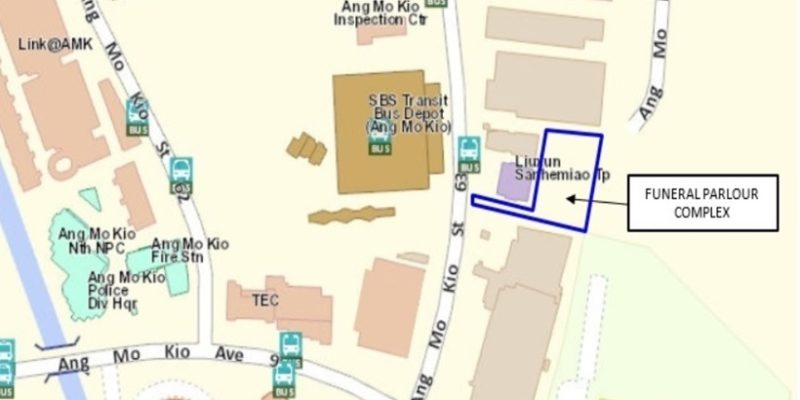
Location map of the future funeral parlour complex at Ang Mo Kio. Source: NEA

While the industry has welcomed the identification of four new funeral parlour sites, they believe that some of the locations present challenges for the bereaved, reported Channel NewsAsia.

This comes as three of the four sites are within industrial estates, which means they may not be entirely accessible by public transport.

More: Four New Funeral Parlour Sites To Be Developed In Singapore

“Funeral infrastructure is no different from a police station, hospital, fire station – it is part of the community infrastructure,” said Mount Vernon Sanctuary founder Ang Ziqian. “Having easily accessible and convenient locations for funeral parlours encourages the community to come together to support any grieving family.”

He noted that it would not be easy for grieving families, friends and relatives to get to the funeral home in any industrial park as it would require them to walk or drive through loud noises, wrecked cars, metal works and huge trash bins.

“To have already lost a loved one and to have to go through an area that is undignified is not something that I want to wish upon any grieving family…Industrial parks are good for manufacturing, but not suitable for the service profession, especially the funeral profession that handles families in heavy emotional grief.”

Aside from the location, industry players also hope for a longer lease term.

Currently, funeral parlours in industrial parks are required to renew their lease every three years – creating uncertainty when upgrading facilities.

“One cannot expect that any place will stay for long because it’s on three years, and there might be relocation plans,” said Ang Zi Sheng, president of the Association of Funeral Directors.

“If the lease is longer, funeral companies can recoup their capital expenditure on infrastructure.  And I think infrastructure is very important to create a good environment for bereaved families to grieve.”

Ziqian is hoping for a 60-year lease for the sites since the cost of building something from scratch take some time to recoup.

“There is only so much renovation you can do on a three-year lease,” he said. “This doesn’t help the profession to grow.”

To know more about the property hotspots for 2019, check out PropertyGuru AreaInsider


Romesh Navaratnarajah, Senior Editor at PropertyGuru, edited this story. To contact him about this or other stories, email romesh@propertyguru.com.sg

[ad_2]

Source link
LTA aims for ‘45-minute city, 20-minute towns’ travel by 2040 | Property Market

[ad_1]

The Land Transport Master Plan 2040 aims to make commuting around Singapore more convenient.

The Land Transport Master Plan 2040 targets to see people commute to work in just 45 minutes and 20 minutes to get to residential towns, revealed some of its advisory panel on Saturday (12 Jan) during a focus group discussion.

The focus group discussion signalled the end of the public consultation launched by the Land Transport Authority (LTA) in August 2018 to gather feedback on the masterplan, reported Channel NewsAsia.

Get more details on the property market outlook for 2019 here

Under the masterplan, public transport is seen as a transport mix termed Walk-Cycle-Ride and would include rail, buses, private hire cars as well as active mobility devices like e-scooters and bicycles.

Advisory panel member Melvin Yong noted that the “45-minute city with 20-minute towns” aim would be for nine in 10 of all peak hour Walk-Cycle-Ride journeys to the city centre be made in just 45 minutes and less than 20 minutes to get to the nearest neighbourhood centre and amenities.

To achieve this vision, Yong – who is also a Member of Parliament serving as the National Transport Workers’ Union executive secretary – suggested for the creation of more dedicated cycling paths and bus lanes.

LTA could also adopt a single payment and booking platform in order to unify the various modes of transport and make them accessible to all, he said.

Urban planning and land use may also be revised to bring work and play closer to home, he added.

“Personally, I think this could be a game changer,” said Yong. “Because it will make commuting more convenient. It will also make cycling and walking more feasible.”

LTA revealed that over 7,000 members of the public and industry players shared their views on what the land transport system should look like in the future.

The Land Transport Master Plan 2040 advisory panel will give its recommendations by mid-February.

To know more about the master plans for different areas in Singapore, check out PropertyGuru AreaInsider


Romesh Navaratnarajah, Senior Editor at PropertyGuru, edited this story. To contact him about this or other stories, email romesh@propertyguru.com.sg

[ad_2]

Source link
Golden Mile Complex will not be the same again once sold | Property Market

[ad_1]

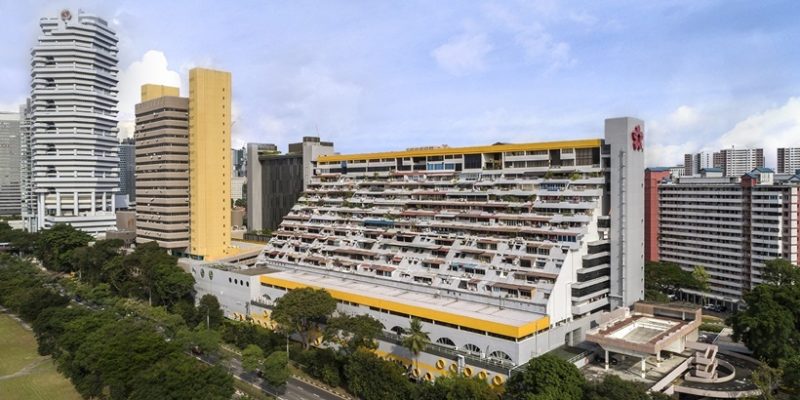
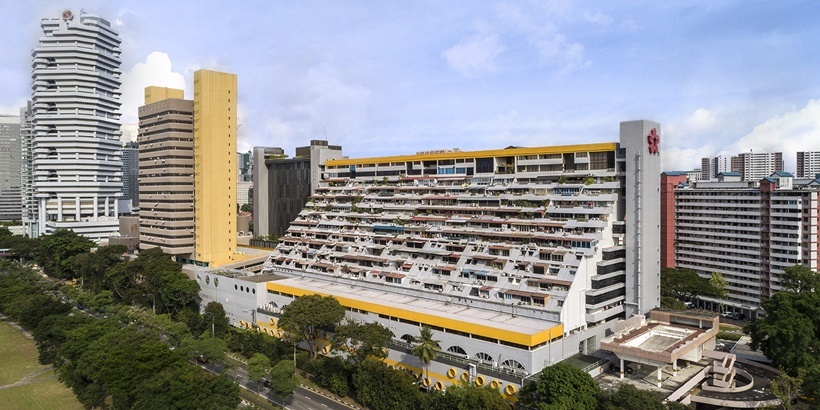
The iconic building is currently on sale for $800 million after over 80 percent of its owners agreed to sell it. (Photo: ET&Co.)

Homeowners at Golden Mile Complex believe the development would not be the same even if the iconic building is kept, reported Today Online.

One of Singapore’s first mixed-use developments, Golden Mile Complex was completed in 1973 and features 418 retail, 227 office and 68 residential units.

The 46-year-old building is currently on sale for $800 million after over 80 percent of its owners agreed to sell it.

More: Designer Calls For National Referendum On Fate Of Iconic Buildings

The Urban Redevelopment Authority’s (URA) planning advice indicated that developers can build an integrated development on the site with a gross floor area of about 86,000 sq m, which includes retaining the iconic building and constructing a new one beside it.

However, owners and staff at the development believe the building will only be a shell of its former self once the deal is signed.

“They keep the building but they won’t keep these people here. Maybe the exterior is the same but the interior will not be the same. No way to replicate this place any more. Once it’s gone, it’s just memories,” said residential unit owner Mr Lai.

Aside from its iconic architecture, the mixed-use development is also a haven for the Thai community in Singapore.

In fact, its unique Thai identity is also celebrated by one of the building’s three main architects, Tay Kheng Soon.

“It is one of the most popular and most successful Thai food centres, which satisfies the original idea that you can have upper class (of residents) above and you can have the working class below,” said the 77-year-old.

The Thai community began settling in the development in the early 1980s and 1990s during the construction boom.

“Every day we see groups of 20, 30 Thai construction workers. They carry pots and pans, rice, pillows… everything,” recalled Mr Lai.

But as the construction workforce started to rely less on Thais and more on workers from India and Bangladesh, the crowds at Golden Mile gradually thinned.

Despite that, shop owners and residents noted that the Thai culture at the development remained strong.

The building continues to be very crowded during Thai festivals like Song Kran in April, said Ponno Kalastree, who owns a residential unit and two office spaces at Golden Mile Complex.

Robert Yao, who owns a muay thai boxing gym, said being situated within the development is a way of spreading Thai culture to his students who are mostly non-Thai nationals.

“If it’s here, it shows you are spreading Thai culture in food, in clothes,” he said. “You can’t create another “Little Thailand”. It must come from the people’s culture. And you can’t recreate that. It’s built over time.”

Even for residents such as Mr Kalastree and Ms Chang who agreed to the collective sale, they said their decision was out of necessity considering that the old building is now riddled with various maintenance issues.

“If no water problems, I won’t think about moving out for sure,” said Ms Chang.

More: Understanding The En Bloc Process (August 2018)


Romesh Navaratnarajah, Senior Editor at PropertyGuru, edited this story. To contact him about this or other stories, email romesh@propertyguru.com.sg

[ad_2]

Source link
65% of 490,440 flat owners took out HDB loans

[ad_1]

The average monthly instalment for flat owners servicing HDB loans ranges from $567 to $1,253 depending on the flat type. 

The Ministry of National Development revealed that 490,440 HDB flat owners were servicing mortgages as at end-2018, of which 65 percent (320,526) took their loan from the Housing Board.

In a written reply to MP Walter Theseira, the ministry noted that 22 percent of those that took an HDB loan owned a three-room or smaller flat, 46 percent owned a four-room flat, 26 percent owned a five-room flat, while the remaining six percent owned an executive or larger flat.

Find HDB flats for sale or read our HDB guides and BTO guides

“The average monthly instalment for flat owners of three-room and smaller, four-room, five-room, and executive/bigger flats servicing HDB loans was $567, $853, $1,058 and $1,253 respectively,” it said.

“Amongst these flat owners, 224,836 (70 percent of 320,526) households paid their monthly instalment fully using CPF monies, 44,693 (14 percent) households paid fully in cash, and 50,997 (16 percent) households used a combination of cash and CPF monies.”

It added that 91 percent of those who took an HDB loan also secured a concessionary loan, the interest of which is pegged at 0.1 percent above the CPF Ordinary Account interest rate, which currently stands at 2.5 percent and does not change frequently.

“This has helped to provide certainty to HDB borrowers on their monthly mortgage repayments.”

Meanwhile, about 169,914 (35 percent of 490,440) households are servicing loans for their HDB flats from financial institutions (FIs).

It added that less than one-third of all outstanding housing loans extended by FIs were pegged to floating market interest rates as of September last year, which was down from around 60 percent in 2016.

“Many FI borrowers have switched to fixed-rate loan packages, which has reduced their vulnerability to market interest rate increases.”

HDB loan vs bank loan: What are they and which is better?


Romesh Navaratnarajah, Senior Editor at PropertyGuru, edited this story. To contact him about this or other stories, email romesh@propertyguru.com.sg

[ad_2]

Source link
Almost 50% of public rental tenants previously owned HDB flats

[ad_1]

Many public rental tenants struggle to afford a flat due to medical issues, divorce or loss of employment.

Over the past two years, an average of around 7,300 households have applied for rental flats each year, revealed the Ministry of National Development in Parliament on Monday (14 Jan).

“HDB’s public rental flats cater to households with no viable housing options or family support,” it said.

Find HDB flats for rent or read our HDB guides and BTO guides

Responding to a query from MP Zainal Sapari, the ministry said the demographic and socio-economic profile of the households was varied, with 90 percent having a household income of $1,500 or less, 40 percent were widowed or divorced, while a similar proportion were married.

Reasons cited by applicants for needing rental housing were varied, such as the inability to afford a flat due to medical issues, divorce or loss of employment.

It noted that “close to half of the households in public rental have owned an HDB flat before”.

Meanwhile, the most common reasons why public rental applications are denied include not meeting the citizenship requirement, having sufficient budget to acquire a flat or having family support for alternative accommodation.

But in the event family support is not forthcoming, the applicant will be referred by HDB to a Family Service Centre for mediation or counselling assistance.

“If mediation is unsuccessful, and the applicants cannot afford to buy a flat, HDB will be prepared to offer an interim rental or a public rental flat.”

Can you afford an HDB flat? Check your affordability now.


Romesh Navaratnarajah, Senior Editor at PropertyGuru, edited this story. To contact him about this or other stories, email romesh@propertyguru.com.sg

[ad_2]

Source link
Over 5,000 households disposed their private homes after buying HDB resale flats

[ad_1]

Buyers of resale flats are not allowed to retain ownership of private homes in Singapore or abroad.

With HDB flats meant for owner-occupation, buyers of resale flats are not allowed to retain ownership of private residential properties in Singapore or abroad, explained the Ministry of National Development in a written reply to Parliament on Monday (14 Jan).

In fact, slightly over 5,000 Singaporean households have disposed of their private residential properties after buying HDB resale flats since the policy was rolled out in 2010.

Over the past three years, around 1,200 households have appealed to retain ownership of their private homes.

HDB has acceded to around 300 appeals after taking into account specific facts of the case, such as the share of the owner in the private home and the reasons why the private home could not be recovered for his or her own use.

Home buyers looking for Singapore Properties may like to visit our ListingsProject Reviews and Guides.


Romesh Navaratnarajah, Senior Editor at PropertyGuru, edited this story. To contact him about this or other stories, email romesh@propertyguru.com.sg

[ad_2]

Source link

Opinion: Same-sex couples cast adrift in Singapore's property market

[ad_1]

While Singapore has made some progress on LGBT issues in recent years, the country’s reputation for conservatism is echoed in archaic rules governing the purchase of public housing. Photo: lazyllama/Shutterstock

While there is no contesting the success of the country’s public housing programme, things aren’t as inclusive as they seem on the real estate scene.

By Daisy Carrington 

Singapore can be excused for taking pride in its breakneck transformation from sleepy seaside port to fourth on the International Monetary Fund’s list of richest nations. This 50-year evolution can be partly attributed to the rigid planning that has, on the one hand, fostered the world’s most successful public housing programme, and on the other, earned it the reputation of being the governmental equivalent of an overprotective parent. 

Often called “The Nanny State,” the island nation can be seen as strict with its 5.6 million children. Rules govern what Singaporeans say (speaking against the prime minister and Christianity are both illegal) and how they behave (famously, there are fines for chewing gum, littering, graffiti, spitting and jaywalking). The upshot is a gross national income of USD78,293 (the second highest globally), and a public programme housing 80 percent of the population, 90 percent of whom own their own Housing and Development Board (HDB) flat. 

However, not all groups are included in the math of Singapore’s success. One such group? Singapore’s Lesbian, Gay, Bi-Sexual, and Transgender (LGBT) community.

Singapore currently has the world’s second highest rate of homeownership, largely due to a generous system of grants and subsidies the HDB provides its citizens. These, however, come with restrictive conditions. Married heterosexual couples, who can apply for housing grants at age 21, enjoy the biggest advantage; whilst unmarried couples, singles, and gay couples are restricted to applying under the Single Singapore Citizen Scheme or Joint Singles Scheme, both of which require applicants to be at least 35. 

These restrictions may not be specifically targeted at LGBT families, but Indulekshmi Rajeswari, a lawyer, LGBT activist, and author of Same But Different: Legal Guidebook for LGBT Couples and Families in Singapore, points out the government has stated openly on several occasions that they are meant to “encourage families”. As same-sex marriage is not recognised, “LGBT people are cut out of this definition. Only those in a recognised family unit—primarily married heterosexual couples—are normally allowed to buy a HDB apartment.” 

More: 5 best Southeast Asian cities for LGBT property seekers

Ann, a new homeowner who identifies as lesbian, felt pressured to buy private property as she didn’t feel secure waiting eight years to be eligible for an HDB flat. She ponders, “What if I waited until I reached 35, and they say, ‘no, the age is now 45’?”

Buying a private apartment meant a big mark-up for Ann, whose two-room condo (still three years from completion) cost USD650,000. The same sized HDB apartment would’ve cost a married couple between USD150,000-220,000. Because Ann’s partner is a foreigner, purchasing the apartment together would have resulted in a 20 percent Additional Buyer’s Stamp Duty. Since her income and savings weren’t enough to secure a mortgage solo, she purchased the apartment with a friend.

Some in the industry feel that the limited supply of new HDB apartments, coupled with an elderly generation of homeowners reluctant to give theirs up, is locking many young Singaporeans out of the market. Currently, Singaporeans who qualify for HDB flats have to wait three years for Built-to-Order apartments to be available. “Affordability and costs of living are bigger issues than the alleged ‘LGBT segregation,’” says Wenhui Lim, director of Singapore-based firm Spark Architects.

In fact, a large portion of non-homeowners continue to live at home. Singapore’s 2016 National Youth Council Survey reveals 97 percent of unmarried young people live with their parents. 

For some in the LGBT community, though, this might not be an option. 

“If your parents aren’t accepting of who you are, you get chased out of the house,” says Deveshwar Sham, a transgender activist who runs Kopitiam Brothers, a shelter and support group for transgender men.

Renting poses its own problems. Legally, LGBT individuals are not protected from discrimination, meaning landlords can opt not to rent to them. Sham relates experiencing first-hand the difficulty of renting a room as a transgender man. “Renting was an issue, because as I was transitioning, I was looking more male, but my ID still showed I was female. Landlords would think, ‘oh, you might be a thief or a con man.’ They don’t discriminate in front of us, or publicly, but they’ll say they already have a tenant,” he relates.

More: Alternative short-term rentals gaining popularity in Singapore

Since Sham transitioned, his ID now states he is male, making his later marriage to his wife legitimate, and easily qualifying him for the HDB subsidies. Transitioning has drastically improved his life. “If I’d not transitioned, I would have considered travelling out of Singapore,” he admits, “but now that I have, I feel comfortable in my country, and don’t have my rights stripped off of me.” 

As with some of its more conservative neighbours in Asia, Singapore’s stance towards its LGBT residents could be costing it talent, and money. China, for instance, represents the world’s third largest “pink economy”, with 90 million LGBT Chinese with a total spending power of USD928 billion, according to the World Property Journal. When it comes to where to invest those dollars, they’re more likely to buy property in such foreign markets more accepting of their lifestyle as Bangkok, Phuket, and Manila. 

Singapore’s policies not only cost foreign investment, but there’s a danger LGBT Singaporeans will emigrate to more tolerant countries when they’re ready to settle down and buy property. 

Ann, for one, hasn’t ruled out leaving Singapore one day. “Even though I purchased this property, it may not be somewhere I want to be for life. If the value increases, I may want to sell it off and move overseas,” she says. “I know a lot of LGBT couples who have chosen to move their lives elsewhere, because here it is ignored that we are humans, too.”

Find HDB flats for sale or read our HDB guides and BTO guides

This article was originally published on Property-Report.com. For more stories from Asia’s most trusted and enduring luxury real estate, architecture and design publication, visit Property-Report.com

[ad_2]

Source link

Tampines EC site receives healthy interest with 7 bids

[ad_1]

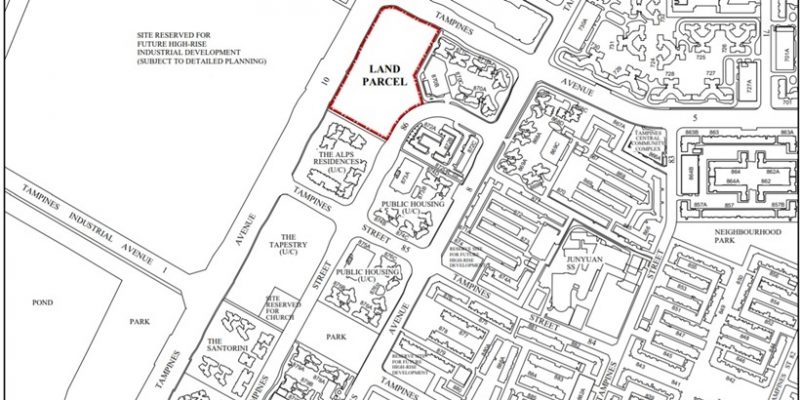
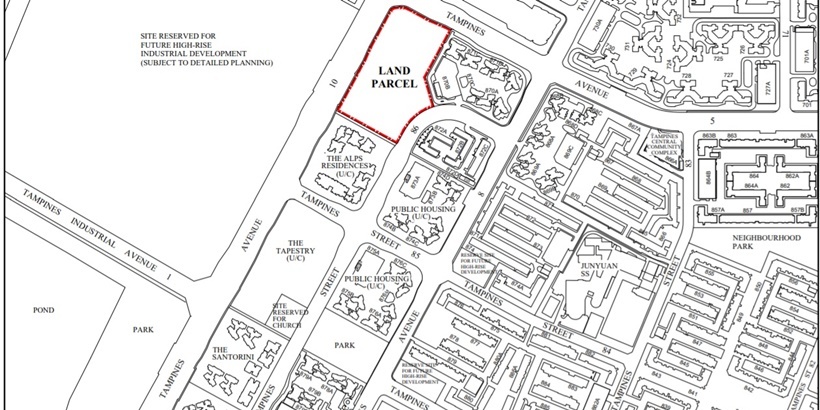
Location map of the EC site at Tampines Avenue 10. Source: HDB

The tender for an executive condominium (EC) site at Tampines Avenue 10 received healthy interest from developers, with seven bids received.

A consortium comprising Hoi Hup Realty and Sunway Developments submitted the highest bid of $434.45 million, followed by MCC Land (Singapore) with a $431.6 million bid.

More: Govt Launches Three Sites Yielding 700 ECs, Over 1,300 Private Condos

CDL Constellation and TID Residential submitted the third highest bid of $414.3 million, while Qingjian Realty (Residential) and Evia Real Estate (8) offered $408.9 million for the site.

Lee Sze Teck, Huttons Asia’s head of research, attributed the keen interest received to the site’s location.

“It is not often that you get an EC site in a mature estate,” he said. “Furthermore sales of new EC projects in Tampines have been well-received in the past. Plus there is a lot of latent demand in the market for EC units judging from the ground experience. That may explain why we see such robust bids put in by developers.”

Launched for sale in October, the 24,933.7 sq m EC site has a maximum gross floor area of 69,815 sq m and a gross plot ratio of 2.8. It comes with a 99-year lease and could yield 695 housing units.

Home buyers looking for Singapore Properties may like to visit our ListingsProject Reviews and Guides.


Romesh Navaratnarajah, Senior Editor at PropertyGuru, edited this story. To contact him about this or other stories, email romesh@propertyguru.com.sg

[ad_2]

Source link
New private home sales fell almost 50% m-o-m in Dec | Property Market

[ad_1]

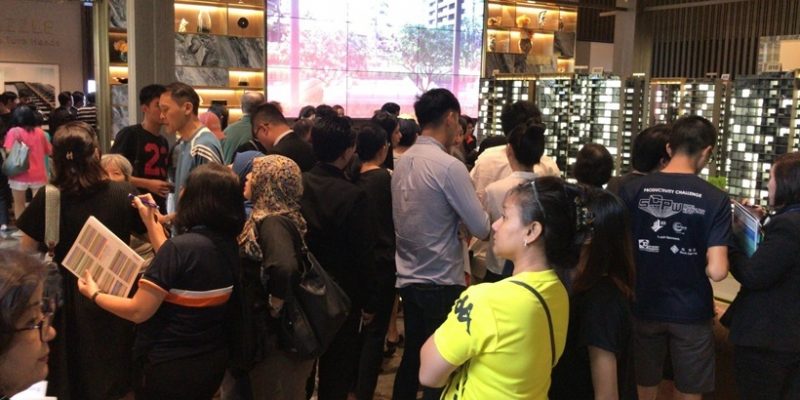
A crowd of potential buyers at Parc Esta’s sales gallery in November. (Photo: MCL Land)

New private home sales fell by almost 50 percent to 602 units in December from 1,201 units in November, on the back of the year-end lull and a dearth of new launches, reported the Business Times.

On a yearly basis, new private home sales surged by 40 percent from the 431 units sold in December 2017.

Including executive condominiums (ECs), developers sold 605 units, down by almost 50 percent from the 1,205 units moved in November, but 14 percent higher from the previous year’s 531 units.

“Despite no new launch in December, sales momentum of earlier launched projects continued even after their initial launch. This largely showed that developers have gotten their product mix and pricing spot on,” said Hutton Asia’s research head Lee Sze Teck.

Parc Esta and Whistler Grand along with Riverfront Residences, Stirling Residences and Parc Colonial emerged as the top five projects in December.

Other projects that registered double-digit sales include Affinity at Serangoon, The Tapestry, Parc Botannia and Belgravia Green.

Christine Sun, head of research and consultancy at OrangeTee & Tie, noted that the ongoing sales momentum at several new projects “may indicate that the property market could be reaching equilibrium soon as prices are stabilising and more buyers are streaming back”.

“We anticipate that the current buying momentum will continue and the supply-led demand may see developers’ home sales reaching 10,000 to 11,000 units for 2019. Many projects are expected to be launched after Chinese New Year, including The Florence Residences and Treasure @ Tampines.”

Sun predicts a bumper crop of 19,000 to 21,000 new homes to be launch-ready this year.

ZACD Group executive director Nicholas Mak, however, expects home buying demand to continue to be moderated by the risk of rising interest rates, the property cooling measures, global economic uncertainty and US-China trade tensions.

“Residential developers’ sales volume in 2019 could continue to moderate to between 7,500 and 9,000 for the whole year as there is still cautious optimism and healthy underlying demand in the market,” he said.

Looking to purchase a new home? Read our in-depth project reviews of all new launches or check out our buying or rental guides.


Romesh Navaratnarajah, Senior Editor at PropertyGuru, edited this story. To contact him about this or other stories, email romesh@propertyguru.com.sg

[ad_2]

Source link